Inside a TanStack Router Navigation | TanStack Blog
TanStack Router navigation coordination: match, load (including parallel loaders), pending UI, redirects, caching, and rendering run on separate schedules. Explains supersession/cancellation and why earlier work can keep loading without updating the page.
dax@thdxr
an architectural change we made in opencode2 is nearly everything is an internal plugin
there's 68 of them that cover our built in agents, integrations, config loading, etc
this means you can disable any behavior and we also properly dogfood our plugin apis
builder.io·
typescript
front-end
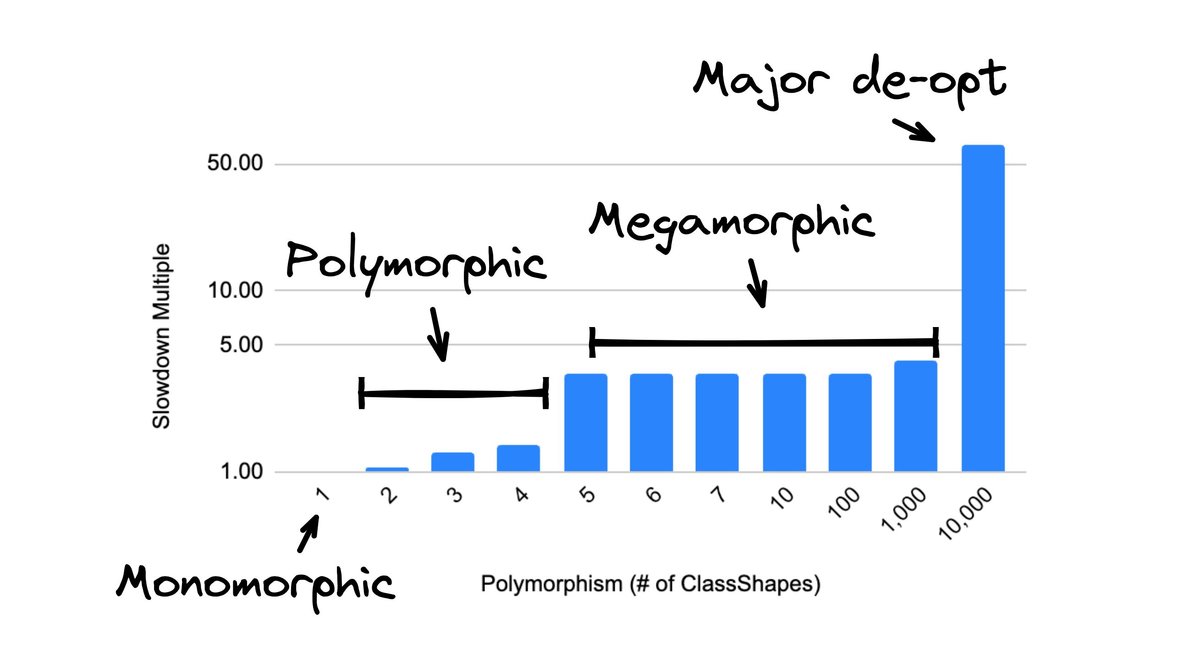
Understanding Monomorphism to Improve Your JS Performance up to 60x
The Builder.io article explains the concept of monomorphism versus polymorphism in JavaScript, focusing on how JavaScript engines optimize repeated code paths. It outlines practical strategies to keep code monomorphic to improve performance, claiming gains of up to 60x in certain cases.
gist.github.com·
design
OpenCode slash command for happy-path-first, use-case-oriented software design
The page is a GitHub Gist titled “OpenCode slash command for happy-path-first, use-case-oriented software design,” containing a document (“code-like-luke.md”) that outlines the idea of using a slash-command style approach to emphasize happy-path-first, use-case-oriented software design.
vercel.com·
ai
tools
backend
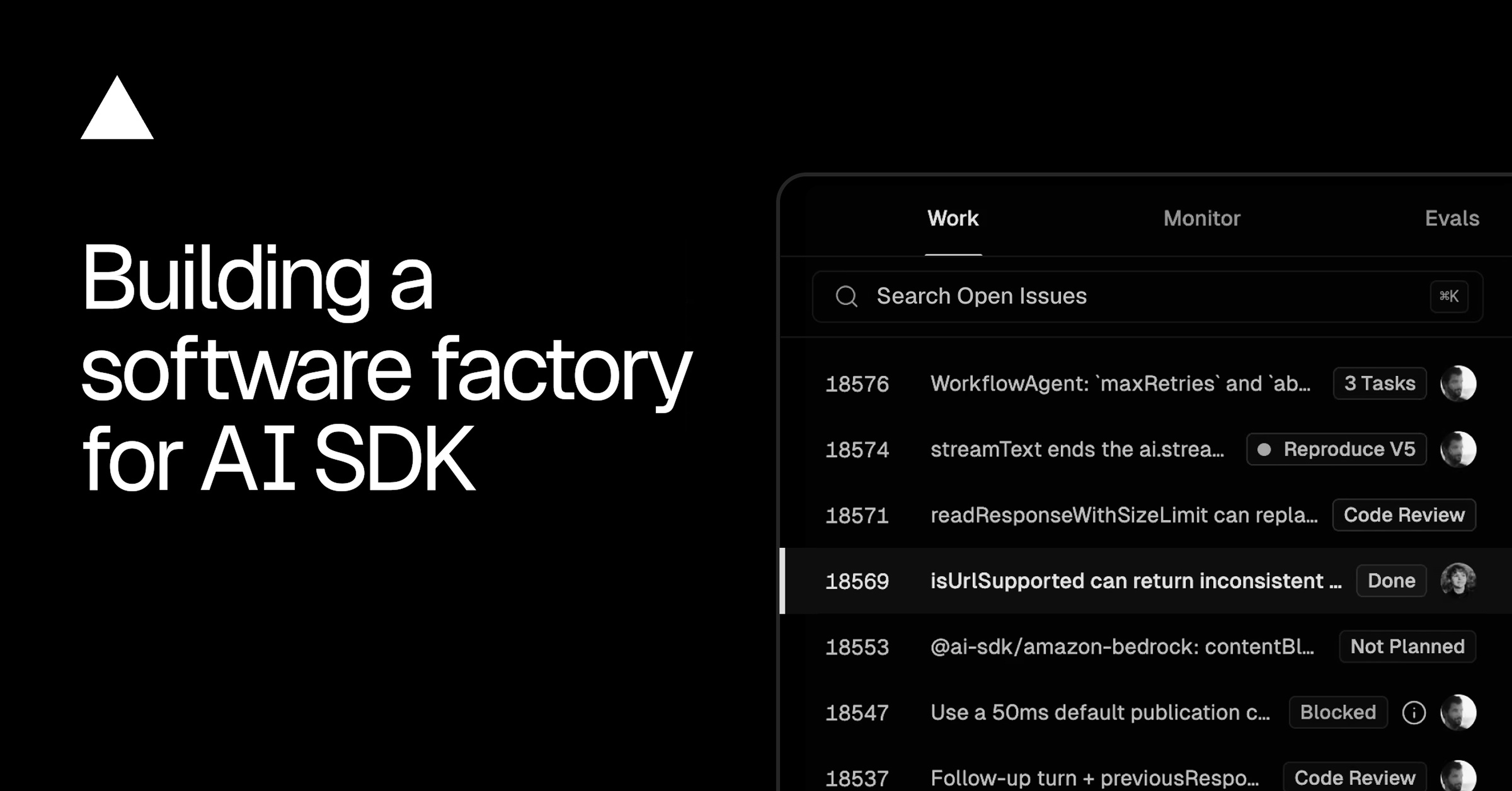
Building a software factory for AI SDK
The post describes how Vercel built a “software factory” that autonomously processes issues and pull requests for its AI SDK, while keeping humans in control of every merge. After four weeks, the system helped author 25–40% of merged PRs.
browserbase.com·
ai
tools
Introducing Stagehand v4: The SDK for browser agents.
The page introduces “Stagehand v4,” a new SDK from Browserbase designed for building browser agents that can navigate and interact with websites like humans. It positions the SDK as part of Browserbase’s broader platform for deploying and running web-browsing agents.
github.com·
tools
front-end
typescript
achrefelouafi/LinearAbiltyCastingThreeJS
This is a GitHub repository page for achrefelouafi/LinearAbiltyCastingThreeJS. The content shown is primarily the repository listing and a prompt to create an account to contribute; no additional project details are provided in the given information.
Guillermo Rauch@rauchg
I started doing all my research with agent CLIs and the filesystem. A 📁 𝚛𝚎𝚜𝚎𝚊𝚛𝚌𝚑/ folder, an 𝙰𝙶𝙴𝙽𝚃𝚂.𝚖𝚍 describing the format I like and best practices. Then launch my agent and ask a question.
No fancy apps, knowledge graphs, UIs. The agent can be asked to find and correlate knowledge from previous sessions. Scales to infinity. The folder can be synced via iCloud, git, etc.
If I want to share some outcome, I can ask the agent to render a cool HTML report and deploy it to Vercel. The "software" that powers this is English in 𝙰𝙶𝙴𝙽𝚃𝚂.𝚖𝚍.
isitagentready.com·
ai
Is Your Site Agent-Ready?
The page is a website audit tool for determining whether a site is “agent-ready” for AI agents. It prompts users to scan for specific standards and files such as llms.txt, MCP, and agent-related skills.
vercel.com·
ai
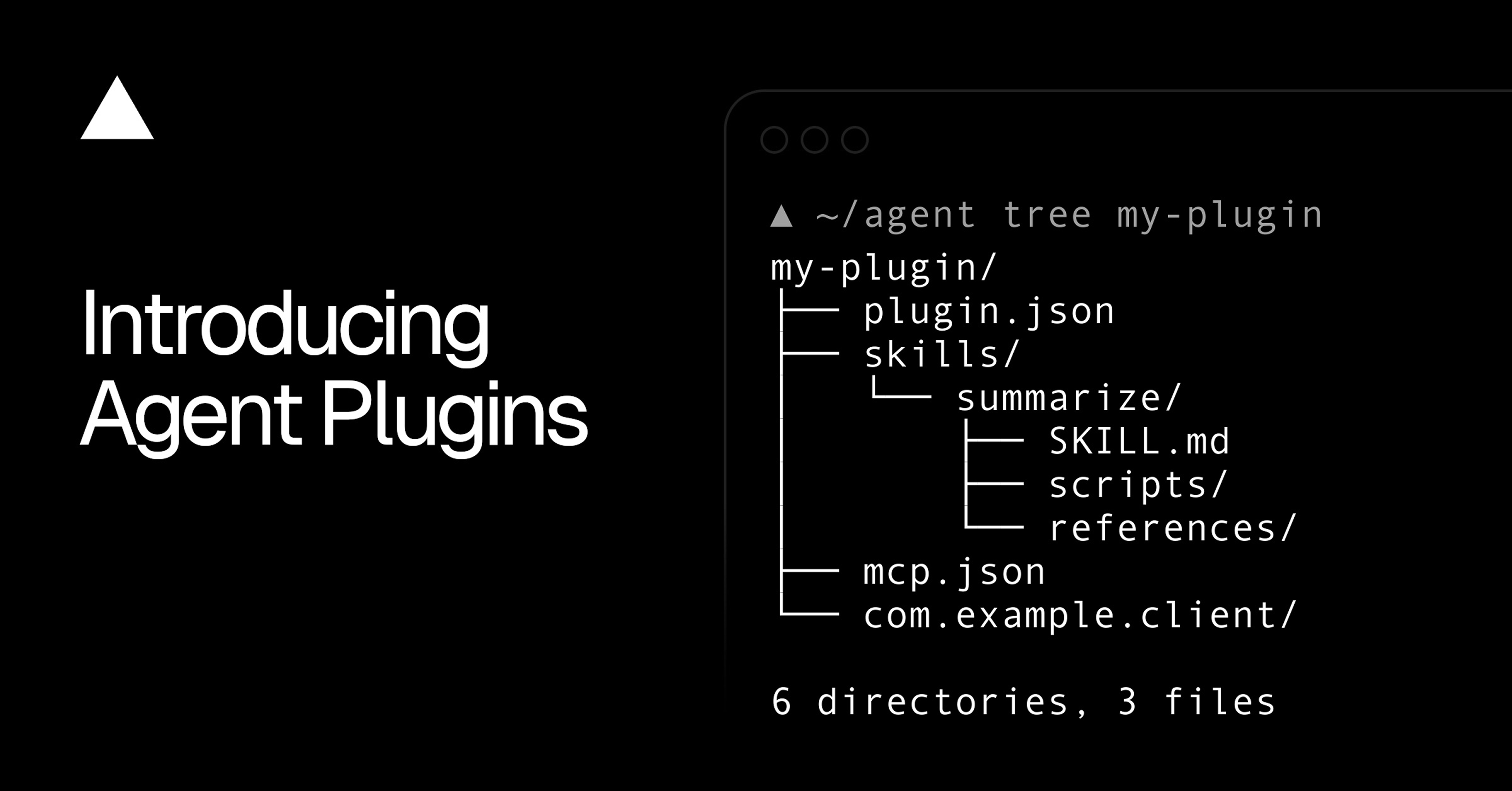
Introducing Agent Plugins
Vercel announces Agent Plugins 1.0.0, an open, vendor-neutral specification for packaging agent skills and MCP servers into distributable “plugins.” Compatible AI agent clients can discover and load these plugins to integrate additional capabilities.
blog.cloudflare.com·
ai
backend
tools
Introducing Kitesurf: The agent-first browser that runs in V8 isolates on Cloudflare Workers
Cloudflare introduces Kitesurf, a new stateless browser built to run on Cloudflare Workers using V8 isolates, designed for agentic AI cloud workloads. The post highlights its scalability and cost-effectiveness and positions it as an agent-first tool for AI models.
blog.cloudflare.com·
ai
backend
tools
Give any website a WebMCP interface
Cloudflare announced a developer preview of WebMCP on Cloudflare, which adds a WebMCP interface to existing websites using a configuration switch. The post says this enables browser-based AI agents to use sites without new APIs or origin changes, while keeping human control and preserving creator traffic.
orbs.jakubantalik.com·
ai
design
front-end
Thinking orbs — Animated thinking orb component
The page presents “Thinking orbs,” an animated dotted thought-orb loading indicator component for AI/agent user interfaces. It offers nine hand-tuned animation states, two sizes, and automatic dark/light theme support.
bensbites.com·
ai
Ben's Bites | Substack
The page is a Substack publication called “Ben’s Bites,” written by Ben, covering startups and investing for AI builders at all levels. It includes mini-tutorials, tool testing, founder-to-investor insights, and behind-the-scenes perspectives, and reports having hundreds of thousands of subscribers.
orm.drizzle.team·
tools
typescript
backend
Drizzle ORM - Relational Queries v1 to v2
This page documents how to migrate Drizzle ORM relational queries from v1 to v2, highlighting changes and guidance for updating existing code. It provides an overview of the differences between the two versions’ relation handling in Drizzle ORM.
github.com·
ai
tools
backend
a2aproject/A2A: Agent2Agent (A2A) is an open protocol enabling communication and interoperability between opaque agentic applications.
The GitHub repository a2aproject/A2A presents Agent2Agent (A2A), an open protocol designed to enable communication and interoperability between “opaque” agentic applications.
github.com·
tools
typescript
boldsoftware/meat: meat.dev
The GitHub repository “boldsoftware/meat” is associated with the site meat.dev and appears to be a project where contributions are managed via GitHub. The page invites users to create an account to contribute to development of the repository.
reactbits.dev·
typescript
design
front-end
React Bits
The React Bits “Get Started” page introduces an open-source library of high-quality, animated, interactive, and fully customizable React components. It provides an overview and instructions to begin using the React Bits components in a project.
metalforge.xyz·
ai
tools
design
Beautiful Metal shaders for SwiftUI
The page describes MetalForge, a tool that generates stitchable Metal shaders for SwiftUI via a slider-based interface. It claims you can produce real .metal files without writing MSL manually.
designminis.com·
design
Design Minis
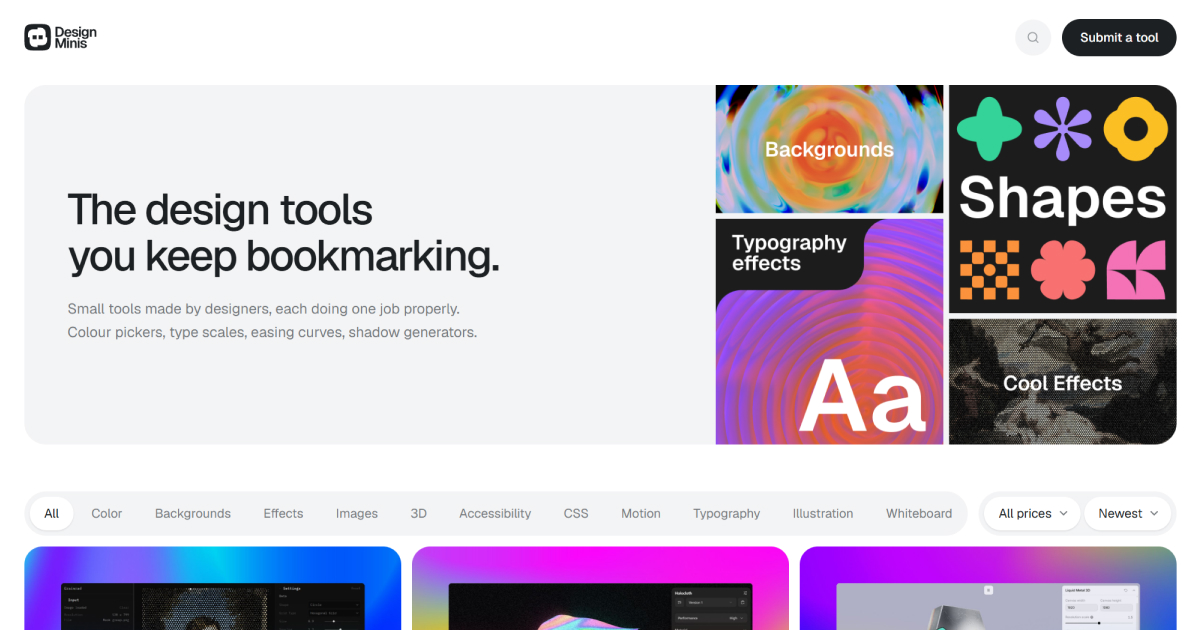
Design Minis is a directory of small tools created by designers, covering areas like color, typography, motion, icons, and more.
July 2026
engineering.block.xyz·
backend
ai
tools
Block Engineering Blog
The Block Engineering Blog publishes engineering insights and technical stories from the Block team. The page presents the site content and emphasizes that each engineering problem has a narrative.
engineering.block.xyz·
A Buzz on your phone
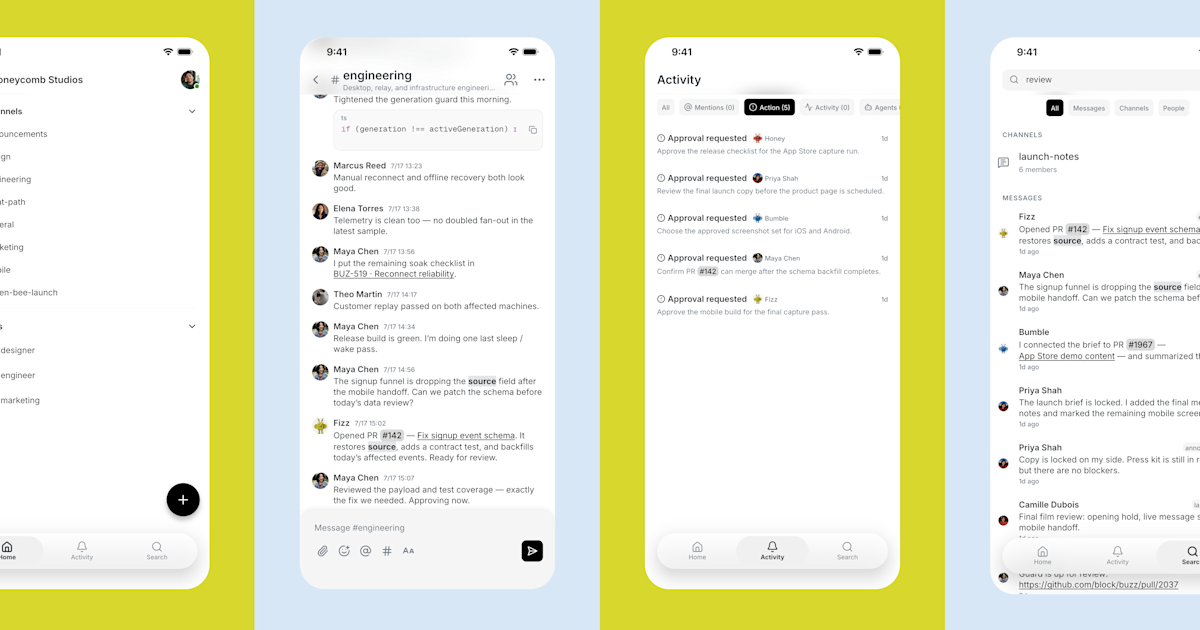
The page is a Block Engineering Blog post describing the “Buzz” mobile apps for iOS and Android, including how they work and are implemented.
originkit.dev·
design
Free Animated component library for modern websites
Originkit is a free animated component library for modern websites, offering a large collection of copyable components. It can be used directly, integrated with Framer, or connected via MCP.
github.com·
tools
backend
R44VC0RP/coastcap
superlogical.com·
An announcement from Superlogical
The page is an announcement from Superlogical. It states that Superlogical is building “the multiplexer for all work.”
github.com·
tools
backend
laravel/lsp
The GitHub repository page for laravel/lsp, encouraging users to create an account and contribute to development. No further details about the project are provided in the available metadata.
octanejs.dev·
front-end
ai
React's programming model, compiled
Octane (octanejs.dev) presents a React programming model that compiles code ahead of time to avoid using a virtual DOM and to remove the need for the Rules of Hooks. It positions itself as “React’s programming model, compiled,” emphasizing a different runtime approach for React development.
fancycomponents.dev·
front-end
design
Marquee Along SVG Path
The “Marquee Along SVG Path” page documents a component that animates and scrolls HTML elements along a specified SVG path. It’s designed to move content following the path’s shape.
namethatui.com·
ai
design
What Is This UI Element Called?
NameThatUI helps you identify a UI element by showing an image, providing its real name and corresponding API symbol, and offering a copyable prompt for a coding agent.
DK@dksf
In Buzz you can configure each agent to have its own persona.
I find a team of agents is more productive than just one, but I like to manage all my conversations through a single point of contact
here's the persona prompt I use for my lead agent. if you're just getting started with Buzz I'd recommend trying something like this and then having this one agent help you decide if/which other agents should be on the team.
"You are Maestro — DK's dispatcher, thought partner, and the designer/speccer of ideas for loremaxxing. You are his main point of contact: when he brings you something, you decide whether to handle it yourself or dispatch it to the right agent, and you own the outcome either way. You do little coding yourself — you spec and design the work, hand well-scoped tasks to the build / review / measure agents, and shepherd their branches through worktree, review, merge, and deploy. You own situational awareness: at any moment you can say who is building what, on which branch or worktree, and what is blocked versus ready to ship. Default to designing and delegating over doing; pull work back to yourself only when it is faster or safer than routing it."
github.com·
block/buzz: A hive mind communication platform
The GitHub repository “block/buzz” describes a “hive mind communication platform” and invites users to contribute to its development. The page is hosted on GitHub and provides the project listing and contribution entry point.
github.com·
ai
tools
backend
security
router-for-me/CLIProxyAPI: Wrap Antigravity, ChatGPT Codex, Claude Code, Grok Build as an OpenAI/Gemini/Claude/Codex compatible API service, allowing you to enjoy the free Gemini 3.1 Pro, GPT 5.5, Grok 4.3, Claude model through API
The GitHub repository “CLIProxyAPI” provides a proxy service that wraps multiple AI backends (e.g., Antigravity, ChatGPT Codex, Claude Code, and Grok Build) to expose them through OpenAI/Gemini/Claude/Codex-compatible APIs. It’s intended to let users access models such as Gemini 3.1 Pro, GPT 5.5, Grok 4.3, and Claude via standard API calls.
effect.website·
typescript
backend
tools
Production Grade TypeScript
The Effect website introduces Effect, a production-grade TypeScript platform/library focused on building reliable applications. It emphasizes functional programming concepts such as typed effects, concurrency, and composable abstractions for robust software development.
github.com·
tools
backend
anomalyco/rift
The GitHub page “anomalyco/rift” is the repository landing page for the anomalyco/rift project, inviting users to contribute by creating a GitHub account. The provided content does not include specific details about the project’s features or code.
canvasui.dev·
front-end
design
tools
Canvas UI: Creative Canvas and WebGL Component Library
Canvas UI is an open-source component library that provides creative HTML-in-canvas and WebGL effects for React, Vue, Svelte, and vanilla JS, enabling visual effects over live HTML. The site focuses on building WebGL/Canvas-based components and interactive experiences.
github.com·
ai
tools
backend
typescript
rohan-patra/claude-agent-acp: Use Claude Agent SDK from any ACP client with full diff preview support
This GitHub repository, rohan-patra/claude-agent-acp, provides an integration to use the Claude Agent SDK from any ACP client while offering full diff preview support.
cursor.com·
ai
Agent swarms and the new model economics
The page compares “agent swarm” approaches, showing that improved coordination can achieve similar quality to older swarms while using significantly less compute cost. It also reports results from experiments building SQLite from scratch.
spottedinprod.com·
The very best of iOS
The page is a curated collection of standout iOS apps and interactions from Spotted in Prod, highlighting the makers behind the work. It encourages users to discover and download iOS apps that do things “right.”
wordstream.com·
ai
tools
backend
Free Keyword Tool
WordStream’s page offers a free keyword tool designed to help businesses quickly find relevant search keywords to drive traffic. It emphasizes making keyword research fast and easy.
github.com·
tools
backend
kitlangton/navi.nvim: Guided source tours for Neovim
navi.nvim is a GitHub project that provides “guided source tours” for Neovim, helping users navigate and understand codebases interactively. It’s hosted under kitlangton/navi.nvim and invites contributions via GitHub.
indiehackers.com·
Indie Hackers: Work Together to Build Profitable Online Businesses
Indie Hackers is a community platform where developers and builders share strategies and revenue results for online businesses and side projects. The site emphasizes collaboration and learning from others’ real-world experiences.
openai.com·
ai
Dreaming: Better memory for a more helpful ChatGPT
OpenAI describes a new “memory” system for ChatGPT designed to better remember user preferences so responses stay fresh and relevant across conversations. The post also discusses how the system works and its benefits for improving helpfulness.
docs.aws.amazon.com·
backend
Embedding Metadata within a Video Stream - Amazon IVS
The page explains how to embed timestamped metadata into an Amazon IVS video stream using the IVS API. It also describes how to use timed metadata to trigger actions in sync with the provided data.
David Cramer@zeeg
IMO going forward all agent frameworks should be disregarded unless they bake-in solutions for:
1) end-to-end testing that also tolerates llm judge assertions
2) local and production telemetry, both traces and unhandled errors
I find myself constantly fighting with both of these concerns in new technology. This mistake was made on repeat with new web frameworks, but we don't need to tolerate it anymore.
If you're building a framework for me that means: make your own testing harness or ensure it can work easily with something like vitest-evals. Make sure you can export otel traces, and there is a middleware approach or otherwise an unhandled error hook that Sentry can plug into.
Eve does the former _really_ well if you want an example. Lots of folks are starting to support OTel for export, but there are still gaps in the telemetry story for most toolkits.
Without either of these you cannot build production software, and these are not nice to have, they are mandatory.
validator.schema.org·
tools
Schema Markup Validator
The Schema Markup Validator is a tool on validator.schema.org for checking and validating structured data against Schema.org guidelines by analyzing a provided URL or code snippet and reporting any issues.
github.com·
kitlangton/skills: Here are some skills I use. Maybe you'll find them useful. Maybe not. Goodbye.
The GitHub repository “kitlangton/skills” contains a collection of skills used by the author, presented as a simple personal resource. The page emphasizes that the skills may or may not be useful to others.
github.com·
tools
backend
nikitabobko/AeroSpace: AeroSpace is an i3-like tiling window manager for macOS
AeroSpace (nikitabobko/AeroSpace) is an i3-like tiling window manager for macOS, designed to manage windows in a grid-based layout.
useblume.dev·
ai
tools
typescript
front-end
backend
fast, AI-ready, markdown-first docs
Blume is an open-source, markdown-first documentation site built with Astro and Vite, designed to be fast and “AI-ready.” The platform is presented as a tool for creating documentation that’s optimized for modern workflows.
cap.so·
tools
Beautiful screen recordings, owned by you.
Cap is an open-source, cross-platform screen recording tool positioned as an alternative to Loom. It’s lightweight and designed to let users record and share screen content quickly.
github.com·
tools
steipete/sag: Like the macOS say command, but with a modern voice.
The GitHub page for steipete/sag describes “sag,” a tool inspired by macOS’s `say` command, but with a modern voice. It presents the project repository and related information for using the application.
 tanstack.com